Naturae Ribera Cohousing
Urban regeneration in Aranda de Duero: housing, energy, circularity and nature
A new model of urban regeneration
Intermediate cities face complex challenges: rising temperatures, energy dependence, biodiversity loss, water pressure, and social fragmentation.
Naturae Ribera was created as an integrated response to these challenges. It doesn’t propose isolated solutions, but rather a systemic approach that connects housing, energy, nature, and community in a single, coherent project.
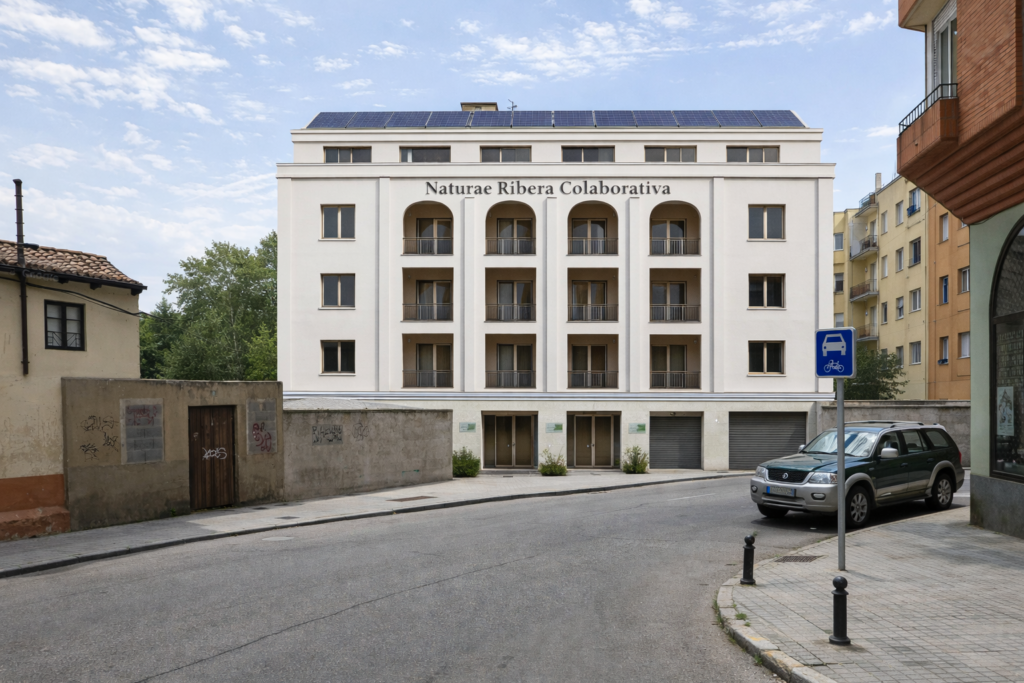
It is located at Calle Sol de las Moreras 6–16, in the center of Aranda de Duero, transforming an urban plot into a space for climate and social innovation.
Vision
Create a replicable urban regeneration model that synergistically integrates:
Objetive
Develop a demonstrator project that increases urban climate resilience, reduces emissions and waste, improves biodiversity, and strengthens social cohesion.
Community before building
Naturae Ribera is structured as a collaborative housing cooperative made up of 11 households.
Members not only live in the building: they actively participate in its design, execution and continuous improvement, contributing technical knowledge, professional experience and long-term commitment.
The project includes ample common areas:
Housing is conceived as social and climate infrastructure: efficient, healthy, comfortable and designed to reduce energy vulnerabilities.
Collaboration is not future: it begins from the design and construction phase.
Participatory governance
The cooperative model allows:
Collaboration is not future: it begins from the design and construction phase.

Shared energy. Fair energy. Smart energy.
Naturae Ribera integrates a local energy community based on:
The system connects:
As a differentiating element, the system incorporates energy storage using a hydrogen fuel cell, developed in collaboration with the technology startup Kinergy.
This allows:
The urban forest acts as a natural thermal regulator, reducing temperatures in summer and decreasing the energy demand for air conditioning.
Biodiversity and energy work in synergy.
An urban forest in the city center
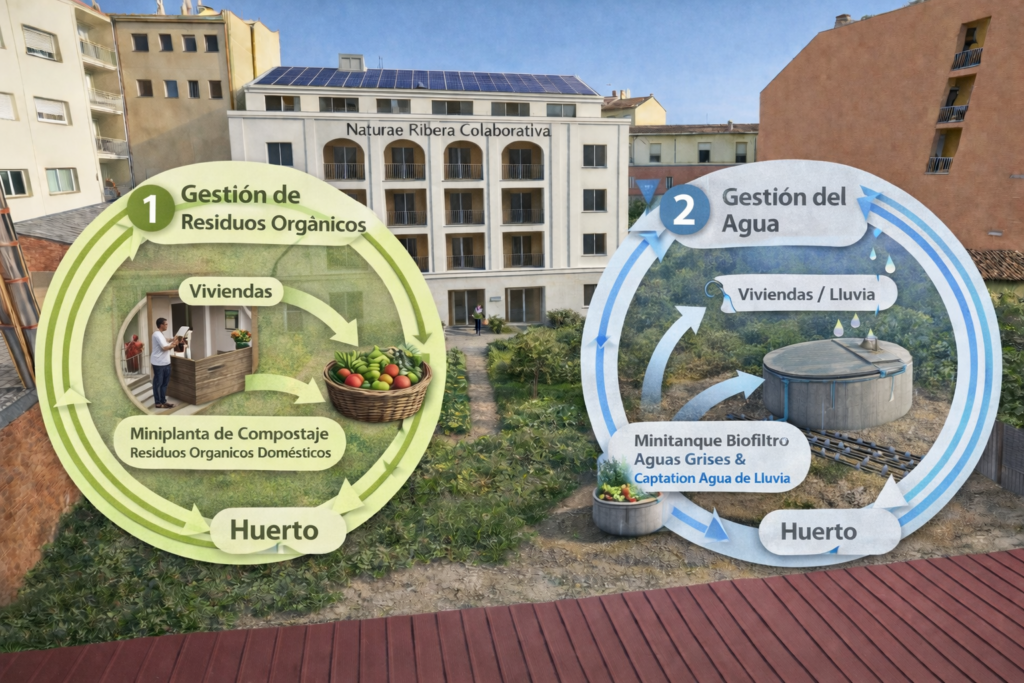
On the non-buildable area of the plot (~300 m²) a Nature-based Solution will be developed consisting of:
The space will have regulated public access in collaboration with the City Council.
Environmental and climate impact
Energy impact
Social and health impact
Adaptive monitoring and management
For at least three years, the following will be monitored:
A replicable model
Naturae Ribera is conceived as a pilot project with high potential for replication in other plots and neighborhoods of Aranda de Duero, the Ribera del Duero and other intermediate cities in Spain and Europe.
It demonstrates that a just, resilient, and nature-based urban transition is possible.
A replicable model for intermediate cities in Spain and Europe.
We will provide more details and ways to participate in the project shortly.